From Zero to 10,300 Google Clicks in 6 Months: An Ohio Fence Contractor SEO Case Study
How we helped Scheiderer Fence build organic search visibility through technical SEO, city-focused service pages, an intentional content funnel and consistent Google Business Profile management.
A solid fencing business. Almost invisible on Google.
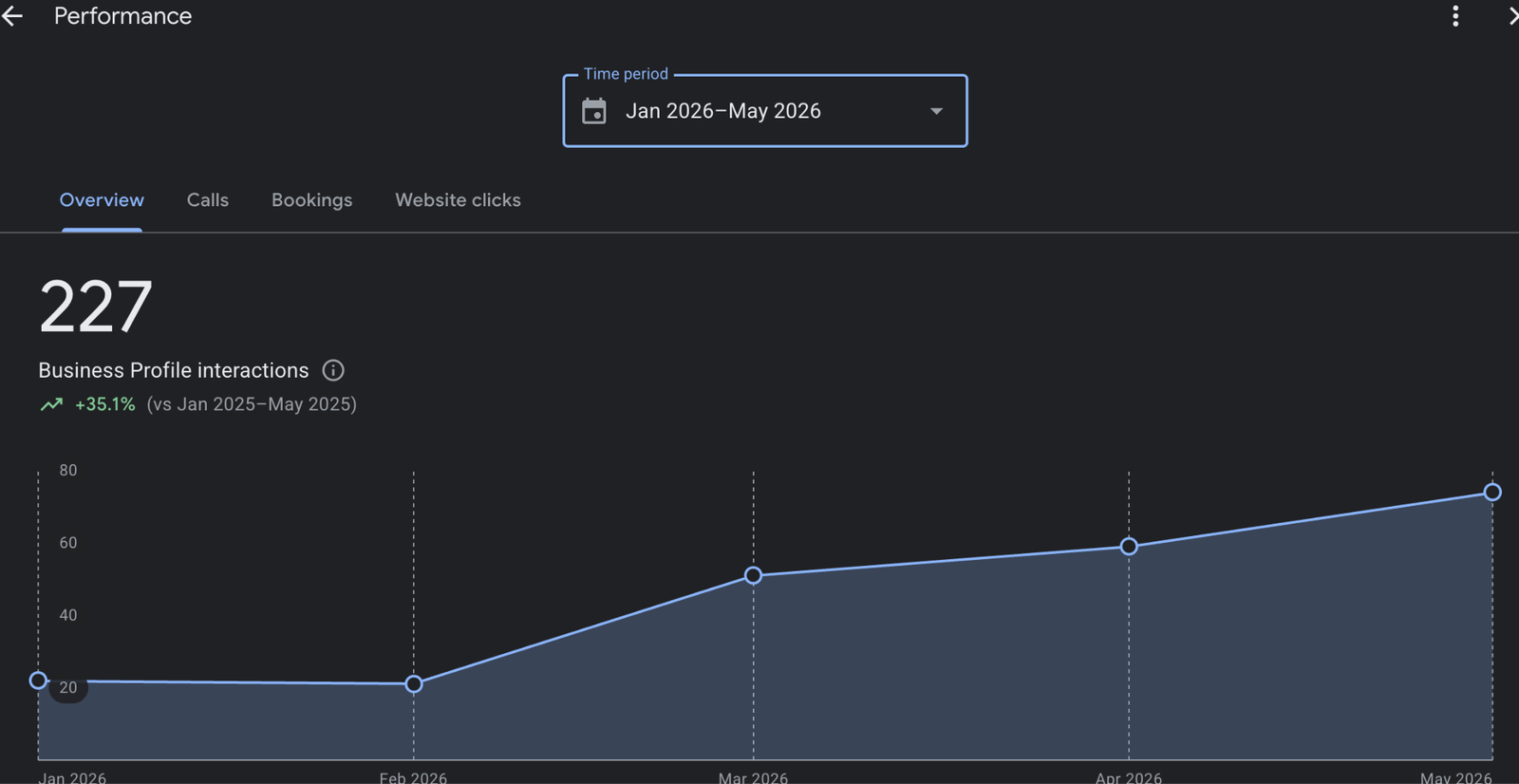
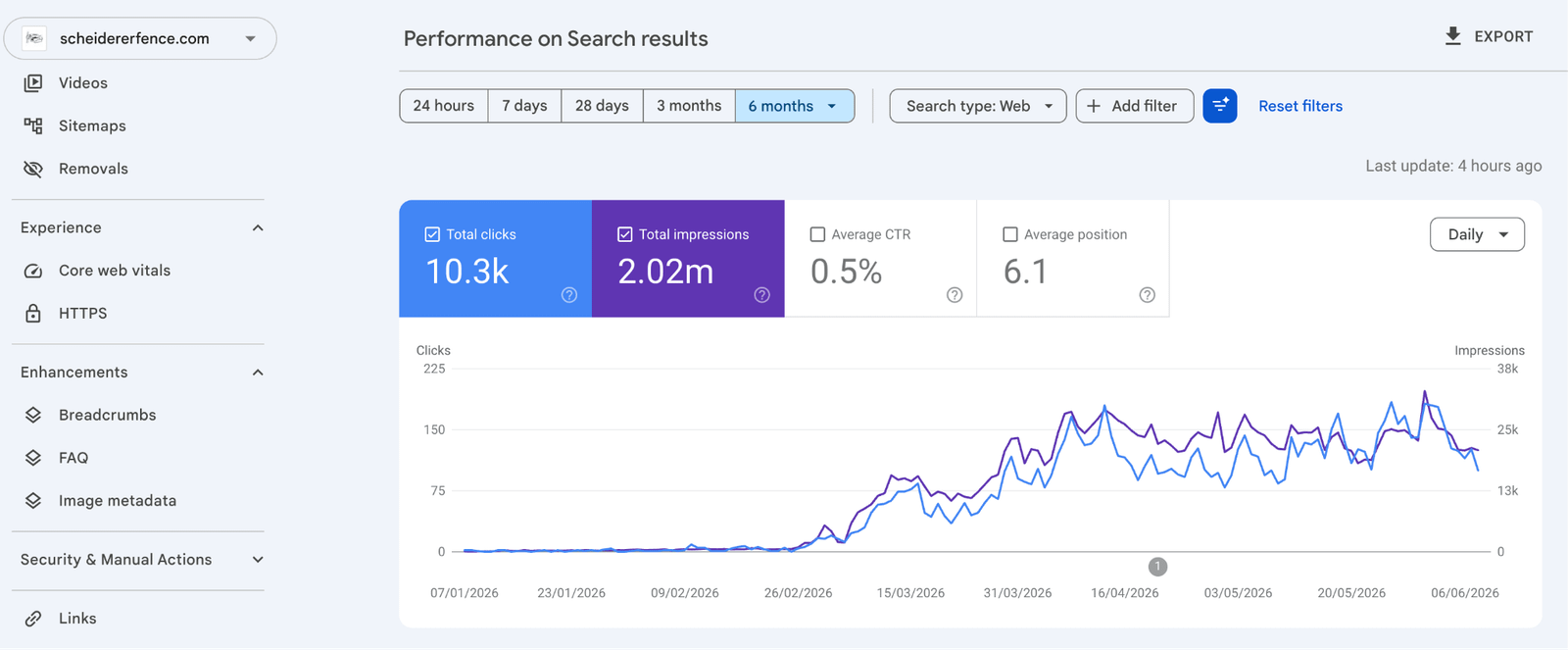
At the start of January 2026, Scheiderer Fence had essentially no organic visibility in Google Search. The website was starting from zero recorded clicks and impressions, while the Google Business Profile was generating only around seven calls a month.
This was an Ohio fence company serving residential and commercial customers—exactly the kind of service business where one qualified project enquiry can be valuable. Yet the website had no dependable search footprint to help local customers discover it.
The problem was bigger than missing blog posts. The site needed a clear technical foundation, a location-based search strategy and a better route from discovery to enquiry. That became the focus of our fence company SEO work.
What the Google Search Console data actually showed.
We fixed the structure before scaling content.
Publishing dozens of pages means little when search engines cannot clearly understand the business, services and local relevance. Our first phase of fence contractor SEO focused on making the website easier to interpret and easier to navigate.
Structured data from day one
We implemented relevant structured data across page types, including LocalBusiness, Service, Article, FAQPage and HowTo markup where suitable for the content.
A clear page purpose
We organized the SEO structure around actual fencing services and local search intent, rather than asking the homepage to rank for every possible service-area keyword.
Connected user journeys
We designed content and internal links to move visitors from researching a fence to reaching a relevant service page and requesting a quote.
One service area was not enough. Every important location needed a purpose.
Instead of listing dozens of cities on one generic page, we developed a network of location-specific pages for the client's actual service region.
Each page had its own relevant service-and-location focus, with local information written for that area—not a copied template with a different city name.
This approach expanded the website's opportunity to appear across multiple high-intent searches while helping individual pages target distinct keyword groups—a more focused approach than trying to rank one homepage for every fencing service.
These are search-intent patterns used to plan relevant local landing pages, not claims of ranking for every variation.
We built a content funnel, not a library of disconnected blogs.
Our fence company marketing strategy connected helpful research content with relevant service pages, supporting prospective customers from their first question through to a fencing quote request. Every piece of content had a job.
Helpful research content
Topics such as fence costs in Ohio, wood versus vinyl fencing and which fencing materials last longest.
Guides and comparisons
More detailed educational pages for homeowners comparing options and narrowing down the right solution.
Service and city landing pages
Commercial pages created for people actively looking for a fence contractor and ready to request a quote.
The important connection: Relevant internal links and clear calls to action connected educational articles to the right commercial service pages. That made it easier for a reader to take the next step.
Local visibility that turned into actual phone calls.
We managed Google Business Profile as a local customer-acquisition channel, coordinating relevant categories, service updates, photos, frequently asked questions and review activity with the website's service strategy.
January vs May 2026
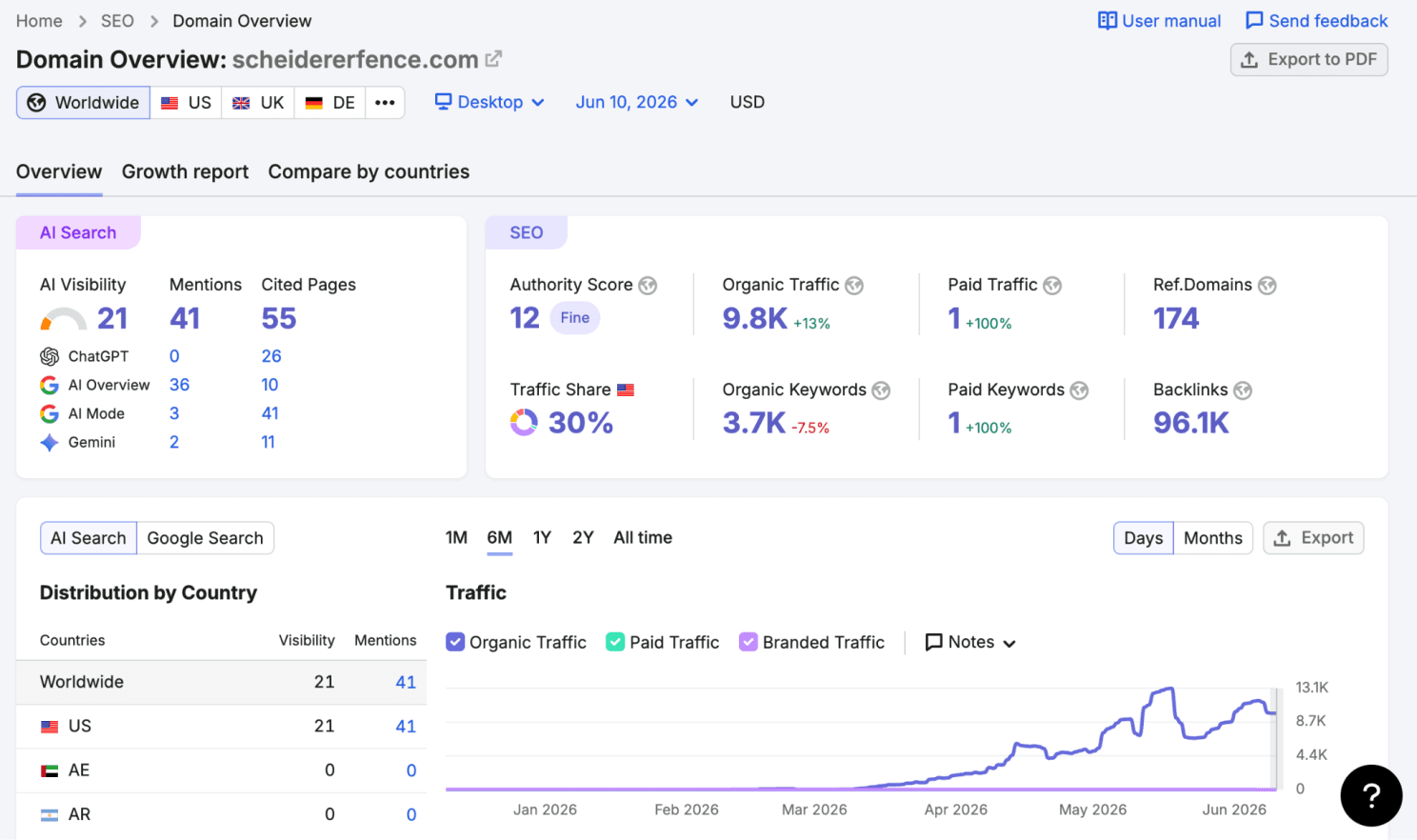
The results extended beyond Search Console.
The SEO visibility snapshot below also showed a much broader organic keyword footprint and growing appearances in AI-powered search experiences.
This was a system, not a one-time SEO trick.
The growth did not come from paid fence advertising or publishing content for the sake of activity. It came from combining technical structure, distinct location targets, relevant educational content, purposeful internal linking and consistent local-profile management.
By March, the site's search traffic had begun breaking out. The Search Console trend then showed regular daily traffic through April, May and June, with peak days exceeding 150 clicks.
For a local fencing company, the real opportunity is not simply more website visitors. It is being discovered by people who need a fence and are ready to get a quote.
What this fence contractor SEO case study means for your business.
How did Scheiderer Fence reach 10,300 Google clicks?
Through a coordinated local SEO strategy covering structured data, individual service-area pages, intent-led content, internal linking and Google Business Profile management. The 10,300 clicks were measured in Google Search Console over January–June 2026.
How does local SEO support lead generation for fence contractors?
When your website and Google Business Profile connect relevant local searches to useful service pages and clear contact options, more potential customers can find and contact the business. In this project, GBP calls rose from seven in January to 32 in May.
What should SEO for fencing companies prioritize first?
Start with a technical and content audit, map your fencing services to relevant city-level searches, improve your key service pages, and coordinate your Google Business Profile with the website. The right order depends on the condition of the existing site.